
Private Tour: Ararat, the Canyon of Angels and Armenia's Wine Road
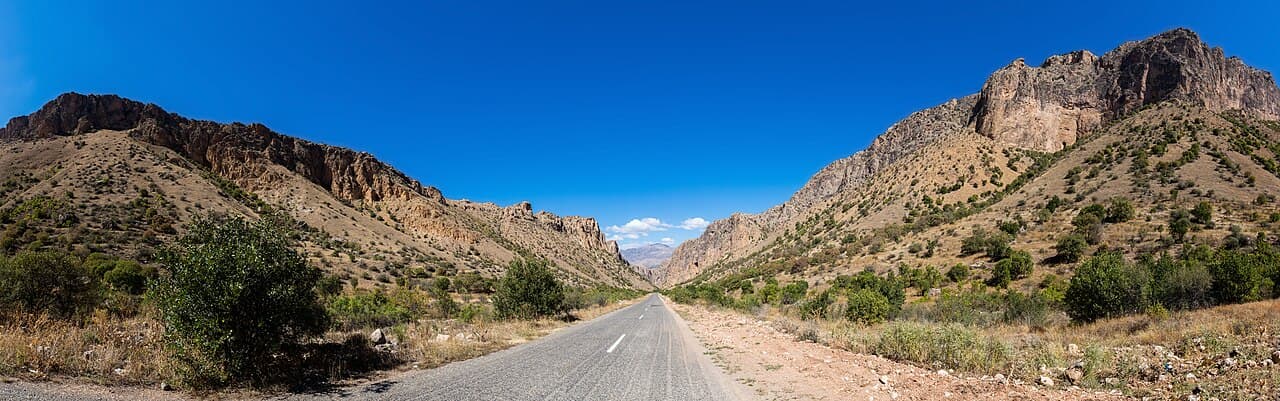
"Ararat, the Canyon of Angels and Armenia's Wine Road" is a route for those who want to see not only Armenia's famous landmarks but also places that far fewer tourists visit.
In the morning — Khor Virap and the legendary panorama of Ararat. Then — the unusual Canyon of Angels with its red-orange cliffs. After that we head into Vayots Dzor, where the medieval monastery of Noravank is hidden among huge rocks, and we finish the day in Areni — one of Armenia's main wine regions, where winemaking history spans thousands of years.
Khor Virap → Canyon of Angels → Noravank → Armenian wine: in a single day, history, religion, geology, architecture and gastronomy come together here.
At 08:00 the Amaras Tour car arrives directly at the address you specify in Yerevan — your hotel, apartment, or another pre-arranged location. There is no common meeting point and no waiting for other participants: the tour is run only for you and your company. We head south through the Ararat valley to the first stop, one of the most symbolic places in Armenia.
Khor Virap is a monastery located almost at the foot of the biblical Mount Ararat and one of Armenia's best-known places of pilgrimage. Its name translates as "deep dungeon," and it is with this dungeon that one of the most important chapters of Armenian history begins.
According to church tradition, the Armenian king Trdat III ordered Grigor the Illuminator to be imprisoned in a deep pit for professing Christianity. Grigor spent about 13 years here and, according to legend, remained miraculously alive the whole time. He was later freed, and it is his activity that is credited with the conversion of King Trdat III and Armenia's adoption of Christianity as a state religion in the early 4th century. This event is traditionally dated to 301 AD — which is why Armenia is called the first country in the world to officially adopt Christianity as its state religion, and Khor Virap became one of the main symbols of this history.
Within the complex you can descend into the underground pit that tradition links to Grigor the Illuminator's imprisonment: it is about 6 metres deep, and the descent is by a narrow metal ladder. The visit is optional — guests who find the descent uncomfortable can explore the monastery complex without going down into the dungeon.
The sanctity of this place is far older than the buildings that survive today: in the 7th century a chapel built by Catholicos Nerses stood here, while most of the present-day monastery ensemble dates to a later period. In this way Khor Virap unites an early Christian tradition with the architecture of several historical eras.
But Khor Virap is famous for more than its history: it is from here that one of the most celebrated views of Mount Ararat opens up. In clear weather, Greater and Lesser Ararat are visible almost in their full grandeur, with the Ararat valley stretching between the monastery and the mountain — this panorama has become one of the most recognisable images of Armenia.
On the private tour we don't rush, leaving time for a walk around the monastery, a visit to the dungeon, a story about Armenian history, panoramic photographs and a quiet view of Ararat. After Khor Virap we leave the classic tourist route behind — a completely different Armenia lies ahead.
Not far from the town of Vedi and the village of Dashtakar lies one of the most unusual natural sites of the Ararat region — the Canyon of Angels. There is no ancient temple or fortress here: the main architect of this place is nature itself. Red and orange rock formations create a landscape utterly unlike Armenia's familiar green or grey mountains.
The rocks here stand out for their rich hues, and depending on the sunlight can appear light brown, golden, russet, red or orange. Erosion has gradually worn away the softer rock layers, creating narrow passages, ridges, outcrops and bizarre rock formations — so that some parts of the canyon resemble the scenery of another planet.
The canyon is especially loved by photographers: there is almost no architecture or urban setting here, only rock, dry landscape, sky and the play of light. In clear weather the reddish walls contrast vividly with the blue sky, and this is one of those spots where the photos come out looking nothing like the classic shots of Armenia.
The canyon can be visited in different formats. For the standard private tour we offer an easy walking version covering the main scenic sections and photo spots, and if guests want a full hike the programme can be extended: a full walking route through the canyon area can take about 2–3 hours, in which case the overall tour duration increases.
The final stretch of road to the Canyon of Angels is less prepared, and its condition can vary with the season and weather. That's why the format of the visit is chosen in advance based on the car category, road conditions, weather, guests' physical fitness and the desired length of the walk — part of the way is covered on foot when needed. For Amaras Tour, the main thing is not simply to check a stop off the route, but to reach it safely and comfortably.
The canyon is especially beautiful in spring and autumn; in summer it can get hot here, since there are few shaded spots, so for a summer trip we recommend a hat, water, sunscreen and closed, comfortable shoes. After the walk we continue on toward Vayots Dzor.
As we drive on, the landscape changes again: the plain gradually gives way to mountains, the road winds among rocky slopes and gorges, and soon we enter one of the most beautiful regions of southern Armenia — Vayots Dzor, heading for Noravank.
To reach the monastery we turn off the main highway into a narrow gorge — the Gnishik canyon. The high cliffs grow ever more red, the road runs right between them, and the approach to the monastery becomes a part of the excursion in its own right.
At the end of the canyon the monastery of Noravank appears, as if hidden among huge red cliffs. The name "Noravank" translates as "New Monastery"; the main architectural ensemble dates to the 13th–14th centuries, and in the Middle Ages Noravank was one of Armenia's major spiritual, educational and cultural centres.
Noravank's history is closely tied to the powerful princely house of Orbelian: in the 13th–14th centuries the Orbelians patronised the monastery, and under them the complex expanded considerably — new churches were built here, khachkars were carved, manuscripts were copied, and outstanding masters worked. Noravank also served as the Orbelians' spiritual and family centre.
One of the complex's central churches is the Church of Surb Karapet, dating to the 13th century; nearby stand a gavit, chapels, tombs and numerous khachkars — each part of the complex tells its own chapter of Vayots Dzor's medieval history.
Noravank's most recognisable building is the two-storey Church of Surb Astvatsatsin, also known as Burtelashen. It was completed in the 14th century, and its main architectural feature is an unusual narrow staircase set directly on the outer facade, by which you can climb to the church's second level. The construction is so unusual that it has become one of the symbols of Noravank.
The name of Momik is inseparably linked with Noravank — an architect, sculptor, miniaturist and master stone-carver, one of the outstanding figures of medieval Armenian art. His work stands out for its remarkable precision and richness of detail, and at Noravank you can see architectural works, carving and khachkars associated with him.
A close look at Noravank's facades reveals just how high a level medieval Armenian masters reached: the stone is decorated with geometric ornaments, plant motifs, crosses, images of saints and relief compositions. Some elements look so delicate they seem carved not from stone but from wood or lace.
Noravank cannot be separated from the landscape around it: the monastery's reddish stone harmonises with the canyon's cliffs, and it is especially beautiful in the afternoon, when the sunlight turns the surrounding mountains golden and red. After the visit we leave time for photographs and views.
After Noravank we move from medieval architecture to another ancient Armenian tradition and head to the village of Areni. Today it is one of the country's best-known wine places, but winemaking did not appear here a few decades or even a few centuries ago — its history spans millennia.
The climate of Vayots Dzor is ideally suited to viticulture: there are many sunny days, mountain air, a marked difference between day and night temperatures, and distinctive soils. One of the main local varieties is Areni Noir, from which red and rosé wines are made — this variety has become one of the symbols of modern Armenian winemaking.
Not far from the village is the famous Areni-1 cave, where archaeological research has uncovered a winemaking complex roughly 6,100 years old. Finds there include a vat for pressing grapes, storage vessels, grape remains, grape seeds and other evidence of wine production — it is one of the oldest known winemaking complexes in the world.
Areni-1 is famous for more than wine: a leather shoe about 5,500 years old was discovered in the cave, preserved in remarkably good condition thanks to the dry microclimate. This find became one of the most famous archaeological discoveries in modern Armenia. A visit to the Areni-1 cave is not included in the base route, but can be added to the programme at guests' request.
In Areni we visit one of the region's wineries — the particular winery can be chosen according to guests' preferences and availability on the selected date. The wine tour may include an introduction to the winery, the story of local grape varieties and the history of Armenian winemaking, an introduction to production technology, a visit to the cellar or production area, and a tasting; the exact format depends on the winery chosen.
The final part of the day is the tasting. After a full day on the road, there's no need to rush, and you can calmly sample the wines of Vayots Dzor: depending on the programme, the tasting set may include red, white and rosé wine, dry wines, and reserve or special lines — the number and types depend on the particular winery. The tasting is paid separately unless it has already been included in advance in the private tour's price.
After the tasting, guests can buy the wines they liked directly at the winery, if they are available for sale — also a good option for a gift from Armenia.
Meals are not included in the base price of the private tour. On request we can arrange lunch near Noravank, in Areni, at one of the wineries, or at a local family restaurant; in the private format you can choose in advance a more gastronomic option — with Armenian dishes and Vayots Dzor wine.
After the tasting we begin the journey back. In the evening the Amaras Tour car delivers you directly to the address you specified in Yerevan. The approximate duration of the trip is 10–11 hours, and it increases with an extended walk through the Canyon of Angels, a longer tasting, or a visit to the Areni-1 cave.
Useful information
Booking is required
You can only join the excursion with a booking made in advance. Please do not come to the meeting point without a confirmed reservation, as seats cannot be guaranteed on the day.
To book, contact Amaras Tour ahead of time with the tour you have chosen, your travel date and the number of people. Once we confirm availability we will send you everything you need to complete the booking.
- WhatsApp / Telegram: +374 99 250 525
After your booking is confirmed your seat in the group is held for you.
Meeting point and time
Meeting point: 51 Mesrop Mashtots Avenue, Yerevan, at the lower side of the Matenadaran, next to the Bus Voyage stop, where Koryun Street meets Mashtots Avenue.
Please arrive 10 to 15 minutes before departure so you have time to find the vehicle and take your seat. The excursion leaves on schedule.
Finding our vehicle
The Amaras Tour vehicle will be waiting at the meeting point. It carries an AMARAS TOUR sign in the windscreen, so it is easy to spot.
What the price includes
- Comfortable transport for the whole route
- A professional guide
- Commentary in Armenian, Russian or English
- Bottled water
- An Armenian treat from Amaras Tour
What the price does not include
- Entrance tickets
- Lunch and other meals
- Personal expenses
Entrance tickets
Entrance tickets are bought and paid for separately on site.
Meals
Lunch is not included in the price. Time is set aside for a meal during the tour, and your guide will suggest a suitable place to fit the programme and the timing.
You are welcome to bring a snack of your own.
Visiting churches and monasteries
The excursion visits working religious sites, so we ask you to dress respectfully and to follow the rules of conduct.
Clothing that covers the shoulders and knees is recommended. Please keep quiet inside the churches and bear in mind that services, weddings and other ceremonies may be taking place during your visit.
What to bring
We recommend bringing:
- comfortable shoes
- a hat in hot weather
- a light jumper or windbreaker in cooler months
- a snack if you would like one
Bottled water is provided by the company during the excursion.
Duration and programme
The approximate duration of the excursion is given in the tour description. The actual time of return may shift slightly depending on traffic, the weather and how long the group spends at each site.
The order in which the sights are visited may change for practical reasons, but the main points of the published route are always kept.
Route
- 1Khor Virap Monastery
- 2Canyon of Angels
- 3Noravank Monastery
- 4Areni
- 5Wine Tour and Tasting