
Private Tour: The Road Over the Abyss — From Ancient Areni Wine to the Caves of Khndzoresk and Tatev
This is one of the most unusual and striking routes in southern Armenia — a journey that begins with a glass of wine and ends above the Vorotan Gorge.
In the morning we set off for Areni, the ancient winemaking region, to get acquainted with Armenian wine and taste local varieties. Then the road takes us further south, into Syunik, where a completely different world awaits: caves that were still inhabited relatively recently, an enormous gorge, and a suspension bridge linking its two sides. After Khndzoresk we head to the Vorotan Gorge, where the famous "Wings of Tatev" cableway runs high above the abyss. And the journey's finale is one of the great spiritual and educational centers of medieval Armenia — Tatev Monastery.
Ancient wine → a cave city → a bridge over the gorge → flying above the Vorotan → Tatev. This route is for those who want more than just sightseeing — here the whole day feels like a real adventure.
At the appointed time an Amaras Tour car arrives directly at the address you specify in Yerevan — a hotel, an apartment, or any other place agreed in advance. No shared meeting point, no waiting for other tourists — this day belongs only to you and your company. We head south from Yerevan, and the first major stop is the famous winemaking region of Areni.
The village of Areni is located in Vayots Dzor and is today one of the best-known centers of Armenian winemaking. But the history of wine here did not begin a few centuries ago — it stretches back thousands of years. Next to the modern village stands the Areni-1 archaeological site, which gave the world one of the most important pieces of evidence for the antiquity of this region's wine culture: at the Areni-1 cave, archaeologists discovered a winemaking complex roughly 6,100 years old, along with structures and objects connected to grape processing and wine storage. This find is considered one of the oldest known wineries in the world, which is why Vayots Dzor is interesting today not only for its beautiful modern wineries — there is a genuine historical link here between the ancient and modern culture of wine.
One of the region's symbols is the local Areni grape variety, often called Areni Noir. It has adapted beautifully to the climate of Vayots Dzor: high altitude, abundant sunny days, stony volcanic soils, and a marked difference between day and night temperatures create special conditions for growing grapes. Areni produces mainly red and rosé wines.
At the start of our journey we visit one of the region's wineries. The specific winery can be chosen in advance depending on guests' preferences and availability on the day of the excursion. The program may include learning about the winery's history, a story about the Areni grape, a visit to the production area, an introduction to winemaking technology, a visit to the cellars, a talk on wine ageing, and a tasting. This is not just a "try some wine" stop — we want our guests to understand why Vayots Dzor is considered Armenia's leading winemaking region.
The tasting format depends on the winery chosen. The tasting set may include white, rosé and red wines, wines made from the Areni grape, aged wines, and special or reserve lines. On request, a more extensive tasting format can be arranged. The wine tour and tasting are paid separately unless they have already been included in the individual program calculation in advance. After the tasting, guests may purchase wines they liked directly at the winery, if they are available for sale.
After Areni we begin the long and very beautiful road into Syunik. The surrounding landscape gradually turns more mountainous: the road runs through passes, valleys and high-altitude stretches. Syunik is nothing like central Armenia — the mountains are more massive here, the gorges deeper, and the distances between settlements create a genuine sense of travel. Our next destination is Khndzoresk.
Khndzoresk lies not far from Goris. Today there is a modern village of Khndzoresk, but the main attraction lies within the gorge — this is Old Khndzoresk, a historic cave settlement. What awaits us is not a single cave or a small archaeological site: an entire settlement once existed here. Hundreds of natural and artificially widened caves dot the slopes of the gorge. They were used by people as living quarters, utility spaces, shelters and storerooms, and some caves were connected to one another. The settlement also included ordinary stone houses, churches and other structures.
Cave living survived here for a very long time. Families adapted the natural hollows in the rock to their daily needs: some spaces were lived in, others were used for storing food or keeping animals. The rocks provided natural protection from wind, heat and bad weather — and so, gradually, a unique settlement took shape in which nature and human architecture existed side by side. In the past, Khndzoresk was a fairly large settlement, and life here continued well into the 20th century. Later the residents gradually moved to flatter ground, where modern Khndzoresk arose, while the old settlement remained in the gorge. Today it lets you literally walk in the footsteps of a former way of life.
To reach the heart of Old Khndzoresk, you have to cross the famous suspension bridge. It is about 160 meters long, runs high above the gorge and connects its two sides. The bridge is one of the most memorable parts of the trip: a deep canyon lies underfoot, and on either side are the cliffs and caves of the old settlement. The bridge itself sways slightly as you walk, which makes the crossing feel like a genuine adventure. For those afraid of heights, crossing the bridge can be an emotional moment — but it is exactly from here that some of the best views of Khndzoresk open up.
After crossing the bridge, we continue our walk. Here you can see cave dwellings, rock-cut passages, the remains of old structures, churches, historic paths and panoramic viewpoints — it is here that you truly grasp how large Old Khndzoresk once was. Khndzoresk is tied not only to its unusual architecture: this area played a significant role in the history of Syunik. Its remoteness, rugged terrain and abundance of natural shelters made the settlement well protected, and difficult periods of Armenian history, wars and local resistance passed through this region.
It's important to understand that visiting Khndzoresk is not an ordinary roadside stop. There are descents, climbs, steps, uneven stone surfaces, a suspension bridge and a fair amount of walking. No special athletic preparation is required, but comfortable footwear is essential. For older guests or those who find extended walking difficult, the program can be shortened.
After Khndzoresk we continue our journey through Syunik. The road gradually brings us to one of the region's deepest and most beautiful gorges — the Vorotan. Here the next chapter of our journey begins: before us is the famous "Wings of Tatev" cableway, which links the area of Halidzor village with Tatev. Its length is 5,752 meters, and it is listed in the Guinness Book of Records as the world's longest reversible passenger cableway of its type.
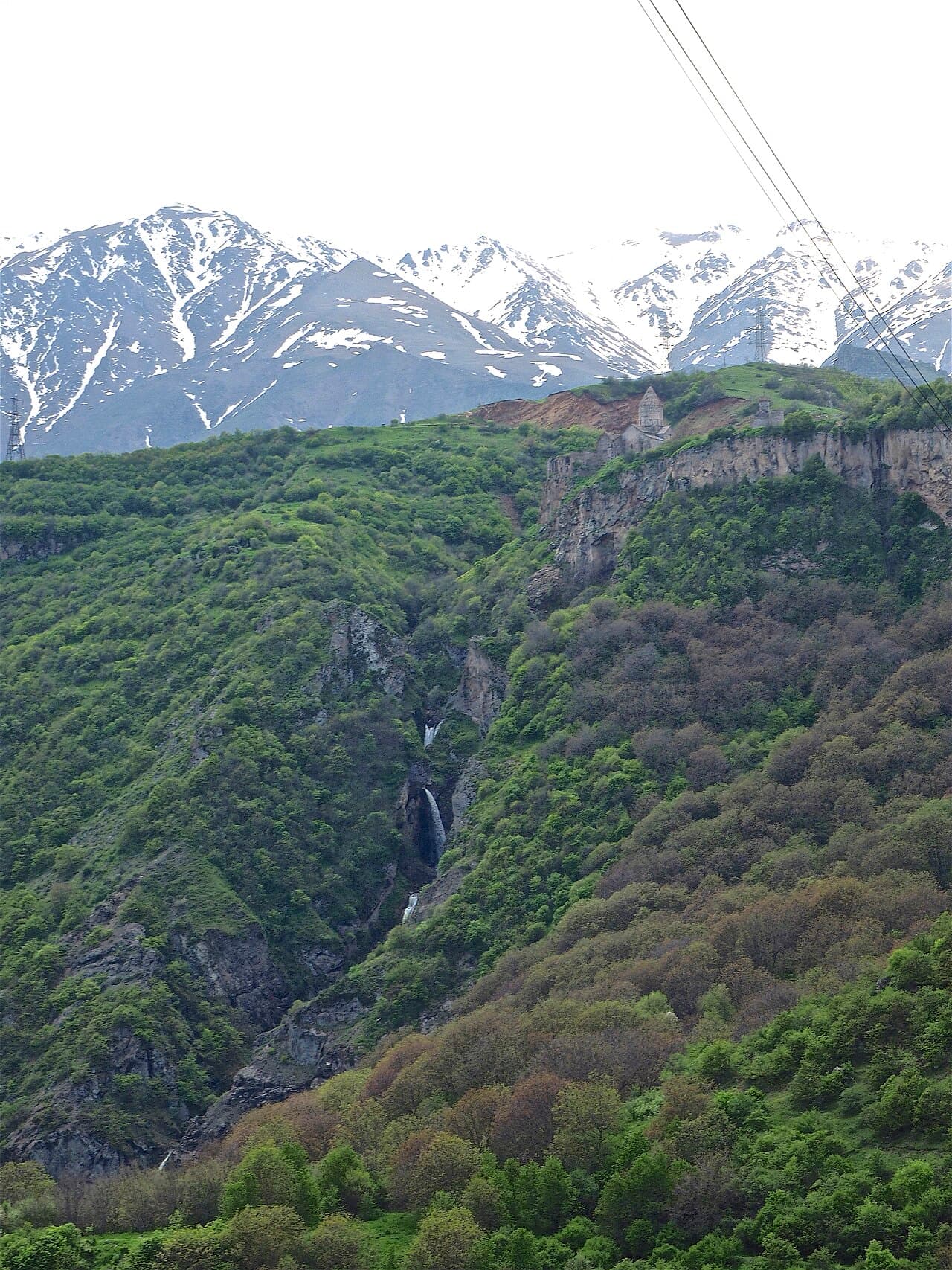
The main impression is not the length of the ride itself, but what it passes over. The cabin travels high above the Vorotan Gorge, and below us lie cliffs, mountain roads, forests, the Vorotan River and the enormous depth of the canyon. As we approach the far side, Tatev Monastery gradually comes into view. You can also reach Tatev by road, but "Wings of Tatev" lets you experience the Vorotan Gorge in a completely different way — it is not just transport, it is a separate part of the journey. In a few minutes the sheer scale of Syunik unfolds before your eyes in a way the ordinary road cannot convey.
Cableway tickets are paid separately. The operation of "Wings of Tatev" depends on the seasonal schedule, technical timetable, weather conditions and wind strength, so the schedule and availability of the cableway need to be checked in advance before every trip.
On the edge of the vast Vorotan Gorge stands Tatev Monastery — one of Armenia's most famous historical complexes. Tatev cannot be seen apart from its surrounding landscape: the monastery stands literally above the abyss, and it is precisely this combination of architecture, history and nature that makes it one of the country's most impressive sites.
An early Christian presence at this site dates back to the first centuries of Christianity's spread in Armenia, though the main monastery complex took shape beginning in the 9th century. Over the following centuries Tatev grew larger and more influential, becoming Syunik's most important spiritual, cultural and educational center. The monastery's main church, dedicated to Saints Peter and Paul — Surb Poghos-Petros — is the architectural heart of the complex. It was built in the late 9th to early 10th century, and once contained rich fresco paintings, traces of which have survived in part.
Tatev gained particular renown in the 14th–15th centuries, when the famous Tatev University operated here — one of the most important centers of learning in medieval Armenia. Subjects studied here included philosophy, theology, grammar, mathematics, natural sciences, music and manuscript art. Tatev was a place not only of prayer — the intellectual elite of its time was formed here. One of the outstanding thinkers behind the development of the Tatev school was Hovhan Vorotnetsi: he played an important role in creating and developing Tatev's educational tradition, and his students carried that work forward. The most famous of them was Grigor Tatevatsi — a philosopher, theologian, teacher and one of the greatest Armenian intellectuals of the Middle Ages. Thanks to his work, Tatev University reached a period of particular flourishing, and the mausoleum of Grigor Tatevatsi stands within the monastery grounds.
One of the most mysterious and fascinating objects at Tatev is the Gavazan, a tall octagonal stone column erected in 906. Its distinctive feature is its ability to move and sway slightly: it is believed that this allowed the column to respond to tremors in the ground, which is why it is often called a kind of medieval seismic indicator. Building a tall stone structure able to remain stable while responding to movement was a serious engineering challenge over a thousand years ago — the Gavazan is fascinating not only as a religious or symbolic object, but as a demonstration of the high level of engineering thought among medieval Armenian craftsmen.
The monastery complex has preserved a medieval oil press, where you can see the equipment and principles behind producing oil from various seeds. This is an interesting part of Tatev because it shows not only the spiritual side of the monastery but also the everyday economic life of a large monastic community.
After the tour, we always set aside time for the panorama. Before us lies one of the most impressive gorges in Armenia: high mountains, a deep valley and the Vorotan River create a landscape of enormous scale, and right on the very edge of this expanse stands the monastery. This is the moment to simply pause for a while.
Meals are not included in the base price of the individual tour. Since the route is very long, we always allow time for a meal, and at guests' request lunch can be arranged in Vayots Dzor, in the Goris area, in Khndzoresk, or in the Halidzor and Tatev area — the place and length of the stop are agreed in advance. For such a long route, we also recommend bringing water and a light snack.
After Tatev we begin the long drive back, and the Amaras Tour car takes you directly to the address you specify in Yerevan. This is one of the longest single-day routes in our individual tour program, with an estimated duration of 13–15 hours, so we recommend an early departure and a comfortable car.
In a single day the journey passes through entirely different worlds: the vineyards of Areni → the ancient culture of wine → mountain roads → the caves of Khndzoresk → a suspension bridge → the Vorotan Gorge → the Wings of Tatev → ancient Tatev. We begin the day with a glass of Armenian wine, then cross the gorge on a suspension bridge, walk through a city hidden in the cliffs, rise above the Vorotan Gorge, and end the journey at one of the greatest monasteries of medieval Armenia.
Amaras Tour — the road over the abyss that leads to Tatev.
Useful information
Booking is required
You can only join the excursion with a booking made in advance. Please do not come to the meeting point without a confirmed reservation, as seats cannot be guaranteed on the day.
To book, contact Amaras Tour ahead of time with the tour you have chosen, your travel date and the number of people. Once we confirm availability we will send you everything you need to complete the booking.
- WhatsApp / Telegram: +374 99 250 525
After your booking is confirmed your seat in the group is held for you.
Meeting point and time
Meeting point: 51 Mesrop Mashtots Avenue, Yerevan, at the lower side of the Matenadaran, next to the Bus Voyage stop, where Koryun Street meets Mashtots Avenue.
Please arrive 10 to 15 minutes before departure so you have time to find the vehicle and take your seat. The excursion leaves on schedule.
Finding our vehicle
The Amaras Tour vehicle will be waiting at the meeting point. It carries an AMARAS TOUR sign in the windscreen, so it is easy to spot.
What the price includes
- Comfortable transport for the whole route
- A professional guide
- Commentary in Armenian, Russian or English
- Bottled water
- An Armenian treat from Amaras Tour
What the price does not include
- Entrance tickets
- Lunch and other meals
- Personal expenses
Entrance tickets
Entrance tickets are bought and paid for separately on site.
Meals
Lunch is not included in the price. Time is set aside for a meal during the tour, and your guide will suggest a suitable place to fit the programme and the timing.
You are welcome to bring a snack of your own.
Visiting churches and monasteries
The excursion visits working religious sites, so we ask you to dress respectfully and to follow the rules of conduct.
Clothing that covers the shoulders and knees is recommended. Please keep quiet inside the churches and bear in mind that services, weddings and other ceremonies may be taking place during your visit.
What to bring
We recommend bringing:
- comfortable shoes
- a hat in hot weather
- a light jumper or windbreaker in cooler months
- a snack if you would like one
Bottled water is provided by the company during the excursion.
Duration and programme
The approximate duration of the excursion is given in the tour description. The actual time of return may shift slightly depending on traffic, the weather and how long the group spends at each site.
The order in which the sights are visited may change for practical reasons, but the main points of the published route are always kept.
Route
- 1Areni
- 2Wine tour and tasting
- 3Khndzoresk
- 4Suspension Bridge
- 5Khndzoresk Cave City
- 6Wings of Tatev
- 7Tatev Monastery