
From Blue Sevan to the Green Forests of Dilijan
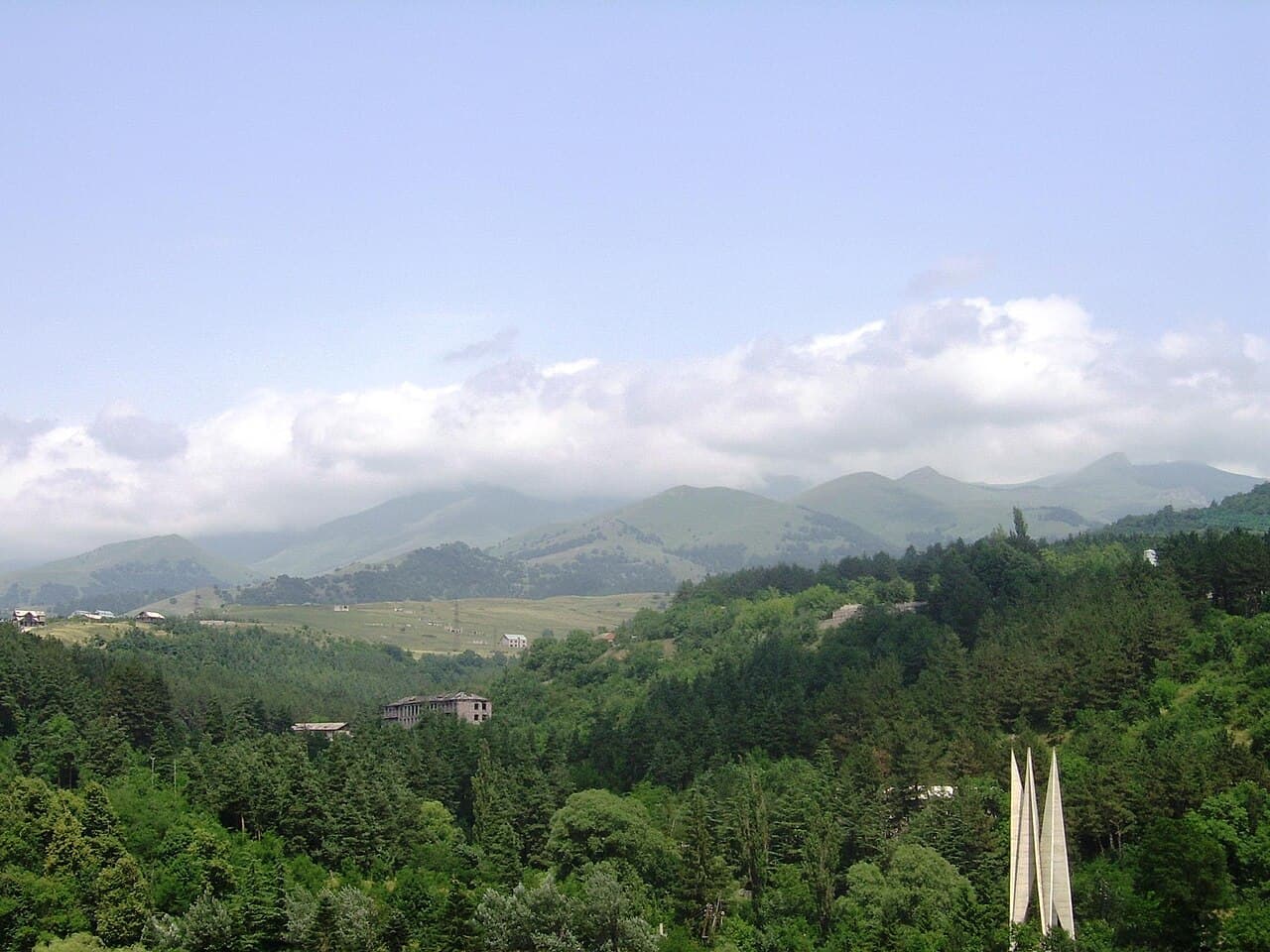
One day, two completely different Armenias. What makes this route so beautiful is its contrast. In the morning we see the vast blue expanse of Sevan and an ancient monastery on the heights. Then we cross a mountain pass, and within a surprisingly short time the landscape changes completely: the dry highlands stay behind, and dense forests, green gorges and the mountains of Tavush appear ahead. Then comes cosy Dilijan, the ancient monasteries of Haghartsin and Goshavank, and little Lake Parz in the forest. This is one of those routes where the road itself becomes part of the journey.
This is a private tour, starting directly from your address in Yerevan and returning to the address of your choice. The route runs through Gegharkunik and Tavush and combines a lake, mountains, forests, medieval architecture and walks. You can book it in two formats: with a professional driver, or with a professional driver plus a separate professional tour guide. You travel in a car from one of four categories — Standard, Comfort, Premium or Luxury. The price is calculated individually, and professional drone filming can be added on request.
We head north from Yerevan towards the Gegharkunik region. The first big impression of the day is Lake Sevan. It lies at about 1,900 metres above sea level and is the largest lake in Armenia; because of its sheer expanse of water, Sevan is often called the Armenian sea. The colour of the lake is always changing, depending on the weather, the clouds, the wind and the position of the sun. Sometimes Sevan is dark blue, sometimes bright azure, and on a clear day the water turns almost turquoise.
On a rise above the lake stands one of Armenia's most recognisable monasteries, Sevanavank. We climb a staircase to reach it, and the higher we go, the wider the panorama of Sevan becomes. Monastic life on the island has early Christian roots, and the main surviving churches date from the 9th century: in 874 the churches of Surb Arakelots and Surb Astvatsatsin were built here. Their construction is linked to Princess Mariam, daughter of Ashot Bagratuni, the future King Ashot I. Over time the monastery grew into an important spiritual centre of the region. Today it stands on a peninsula, but historically it was a real island separated from the shore by water, which is why old photographs of Sevanavank look so different from today. In the 20th century the level of Lake Sevan dropped significantly, a strip of land joined the island to the shore, and the present-day peninsula was born.
After visiting the monastery we leave time for a walk and photos. From here you can really feel the scale of Sevan: on a clear day you see the vast surface of the lake and the mountain ranges around it. Then we continue north, and one of the most beautiful stretches of the road begins. Gradually we leave Gegharkunik behind and head towards Tavush. After the mountain section the road brings us into a completely different natural world: dense forests appear, the mountains turn green, and the air becomes cooler and more humid. We are entering one of the greenest regions of Armenia.
Dilijan lies in the valley of the Aghstev River, among forested mountains, at about 1,100–1,500 metres above sea level. Thanks to its climate, forests and mountain air, Dilijan was already developing as a resort back in the 19th and 20th centuries. Today much of the surrounding forest is part of Dilijan National Park, and it is nature that makes this region so unlike Yerevan or the south of Armenia. Dilijan is often informally called the “Armenian Switzerland”, and the reason is obvious as soon as you arrive: dense forests, mountain slopes, small lakes, a cool climate and green gorges. But the real Dilijan is about more than nature — the town has its own architecture, craft traditions and the atmosphere of an old resort town.
We stop in the historic part of town, Old Dilijan, where the traditional 19th-century architecture of Dilijan has been preserved and restored. Stone houses, wooden balconies, small workshops and narrow lanes create a completely different atmosphere. One of the best-known spots in Old Dilijan is Sharambeyan Street, with its traditional wooden balconies and the architectural details typical of old Dilijan, as well as small craft workshops and souvenir shops. It is a lovely place for an unhurried stroll, photos and getting to know the town.
From Dilijan we head deeper into the forests of the national park. The road winds between mountains and thick greenery, and in one of the green gorges Haghartsin Monastery appears — one of the finest examples of how medieval Armenian architecture can literally merge with nature. The monastic complex took shape roughly between the 10th and 13th centuries, most actively in the 12th–13th centuries, with churches, gavits, a refectory and other monastic buildings added over time. The history of the monastery is tied to the Armenian princely Bagratid family. One of the oldest main buildings of the complex is the Church of Surb Grigor; other buildings later grew up around it, and Haghartsin gradually became a major spiritual centre of the region. The largest and most architecturally striking church is Surb Astvatsatsin, built in 1281. Its tall dome stands out above the surrounding forest, and despite its wealth of architectural detail the church looks light and harmonious. The monastery refectory deserves special attention: built in 1248 by the architect Minas, its large interior is divided by stone supports. It is one of the most interesting surviving examples of this type of medieval monastic architecture in Armenia.
A popular legend is connected with the name Haghartsin. According to tradition, eagles circled above the dome during the consecration of the monastery, and the name is sometimes linked to Armenian words evoking a “play of eagles”. Behind the monastery stands the trunk of a famous old walnut tree, tied to another local tradition: they say that if you pass through the hollow in the trunk and make a wish, it may come true. Of course, it is only a legend — but it is little stories like these that bring a journey to life.
After Haghartsin we continue through the forests of Tavush towards the village of Gosh, home to one of the most important educational and spiritual centres of medieval Armenia, Goshavank. The monastery was founded at the end of the 12th century, and its history is closely linked to Mkhitar Gosh, an outstanding Armenian thinker, scholar and jurist, as well as a theologian, writer and one of the great figures of the Armenian Middle Ages. He is best known for his Code of Laws (Datastanagirk), one of the most important monuments of medieval Armenian legal thought. Before Goshavank there was another monastery, Getik, which was destroyed by an earthquake. Mkhitar Gosh then founded a new monastic centre with the support of Prince Ivane Zakarian; it was first called Nor Getik, “New Getik”, and after Mkhitar Gosh's death it became known as Goshavank, “the monastery of Gosh”. Under Mkhitar Gosh the monastery became not only a religious but also a major educational centre, where students studied, manuscripts were created and medieval Armenian scholarship flourished.
The complex includes several churches, a gavit, chapels and buildings connected with the monastery's school and library, most of them dating from the 12th–13th centuries. But one of Goshavank's greatest treasures is its finely carved khachkars (cross-stones). The works of master Poghos, created at the end of the 13th century, are especially famous. The ornament is so delicate and many-layered that from a distance it looks less like stone than like real lace. It is one of the finest examples of the skill of medieval Armenian stone carvers.
After a day full of history we finish with nature at Lake Parz, hidden in the forests of Dilijan National Park. The name “Parz” means “clear” or “transparent” in Armenian. It is a small forest lake surrounded by green hills, and after the monasteries there is no need for a long tour here: you can walk around the lake, sit by the water, have a coffee, take photos and simply enjoy the quiet of the forest. Depending on the season, extra entertainment and activities may be available on site, paid separately. We began the morning at vast, high-altitude Sevan and end the journey at a completely different lake — small, quiet and tucked away in the woods. Two lakes in one day, and nothing alike. Here history is never separate from nature: monasteries stand among forests, roads run through the mountains, and the day begins at one lake and ends at another.
Useful information
Lunch
Meals are not included in the base price of the private tour.
On request, we can arrange a lunch stop:
- In Dilijan
- Near Haghartsin
- At one of the restaurants along the route
On a private tour, the restaurant and the length of the stop can be agreed in advance.
Return to Yerevan
After relaxing at Lake Parz, we head back to Yerevan.
At the end of the journey the Amaras Tour car drops you off directly at the address of your choice — your hotel, apartment or another place agreed in advance.
The journey takes approximately 10–11 hours.
What's included: tour with a professional driver
The private tour can be booked in two different formats.
- Private car of your chosen category
- Professional driver
- Pickup directly from your address
- Lake Sevan
- Sevanavank
- Dilijan
- Old Dilijan
- Haghartsin
- Goshavank
- Lake Parz
- All transfers on the itinerary
- Panoramic and photo stops
- Drop-off directly at your address
- Bottled water
- Armenian treats from Amaras Tour
In this format the professional driver provides transport, but does not replace a professional tour guide.
What's included: tour with a professional guide
- Private car of your chosen category
- Professional driver
- Separate professional tour guide
- Pickup directly from your address
- Full guided accompaniment
- History of Lake Sevan and Sevanavank
- Tour of Old Dilijan
- History of the Dilijan region
- Full guided tour of Haghartsin Monastery
- The story of Mkhitar Gosh
- Tour of Goshavank
- An introduction to Armenian khachkars
- Lake Parz and nature stops
- Drop-off directly at your address
- Bottled water
- Armenian treats from Amaras Tour
The format with a professional driver and the format with a separate professional guide are priced separately.
Car categories
- Standard — a comfortable car for private travel at the best price.
- Comfort — a car with a higher level of comfort for longer routes.
- Premium — high-end cars with more space and comfort.
- Luxury — executive-class cars for the most comfortable private travel.
The specific car model is chosen based on the number of travellers, the selected category and vehicle availability on the tour date.
How the price is calculated
No fixed price is listed on this page.
The price is calculated individually and depends on:
- The number of travellers
- The car category
- The format — with a professional driver or with a separate professional guide
- Additional services
- Changes to the itinerary
Once we have these details, Amaras Tour calculates the exact price of your trip.
Entrance tickets
The main historical programme usually requires no standard mandatory entrance tickets.
Extra entertainment and activities at Lake Parz are paid separately.
If any sites have additional official fees or paid services on the date of your trip, you will be informed in advance.
Professional drone filming
Professional drone filming can be added on request.
This route is especially beautiful to film thanks to its contrasting scenery:
- Lake Sevan
- Mountain roads
- The forests of Tavush
- Panoramic spots around Dilijan
- The surroundings of Haghartsin
- Forest landscapes
- Lake Parz
Aerial filming is done only in permitted areas, in safe weather and in line with current restrictions; at historical and cultural monuments the drone is flown only where this is allowed.
What to bring
We recommend:
- Comfortable shoes
- A light sweater or windbreaker
- A hat
- Sunglasses
- Water
- Personal medication if needed
Dilijan lies in a more humid, forested climate zone: even when Yerevan is sunny and hot, it can be cooler, cloudy or rainy in Dilijan, so a light jacket is useful even in summer.
Seasons
The route is beautiful almost all year round.
Spring brings fresh greenery and blossoming forests.
Summer offers Dilijan's cool air and lush green landscapes.
Autumn is one of the most beautiful seasons, when the forests turn gold, red and orange.
Winter has a completely different atmosphere: snow, silence and monasteries in wintry forests.
In difficult weather conditions the programme may be adjusted for the safety of our guests.
Can the route be changed?
Yes. This is a private trip.
By prior arrangement, you can:
- Change the departure time
- Spend more time at Sevan
- Extend the walk around Old Dilijan
- Change how long you spend at the monasteries
- Arrange lunch
- Add extra activities at Lake Parz
- Add professional drone filming
- Adapt the programme for a family with children
If the duration or mileage increases significantly, the price is recalculated.
Departure from Yerevan
At the agreed time, the Amaras Tour car arrives directly at your address in Yerevan — your hotel, apartment or another place agreed in advance.
No shared meeting point and no waiting for other tourists — the route is just for you and your companions.
For the most relaxed trip, especially in high season, we recommend setting off earlier.
- Meeting time: 08:15
- Departure: 08:30
The exact pickup time is arranged individually.
Duration
Approximately 10–11 hours.
The duration depends on:
- Your pace
- Time spent at Sevan
- The walk around Dilijan
- The length of the tours at Haghartsin and Goshavank
- Lunch
- Time spent at Lake Parz
- Additional activities
- Video filming
- Traffic conditions
Who this route is for
This tour is especially for those who want to see green Armenia.
In a single day the landscape changes several times: blue Sevan → mountain pass → green Dilijan → ancient Haghartsin → Goshavank → quiet forest Lake Parz.
The route is ideal for:
- A first introduction to northern Armenia
- Families
- Couples
- Friends and small groups
- Nature lovers
- Lovers of history and architecture
- Beautiful photos and videos
- Travellers who want to spend a whole day without rushing
Amaras Tour — from blue Sevan to the green heart of Armenia.
Route
- 1Lake Sevan
- 2Sevanavank
- 3Dilijan
- 4Old Dilijan
- 5Haghartsin Monastery
- 6Goshavank Monastery
- 7Lake Parz